
185,000 Words: What My Interview Archives Reveal About Documentary Craft
I just did something I’ve been putting off: I analyzed every word from 15 years of interview transcripts. All 185,262 of them.
What I found surprised me—and it might change how you approach your next interview.
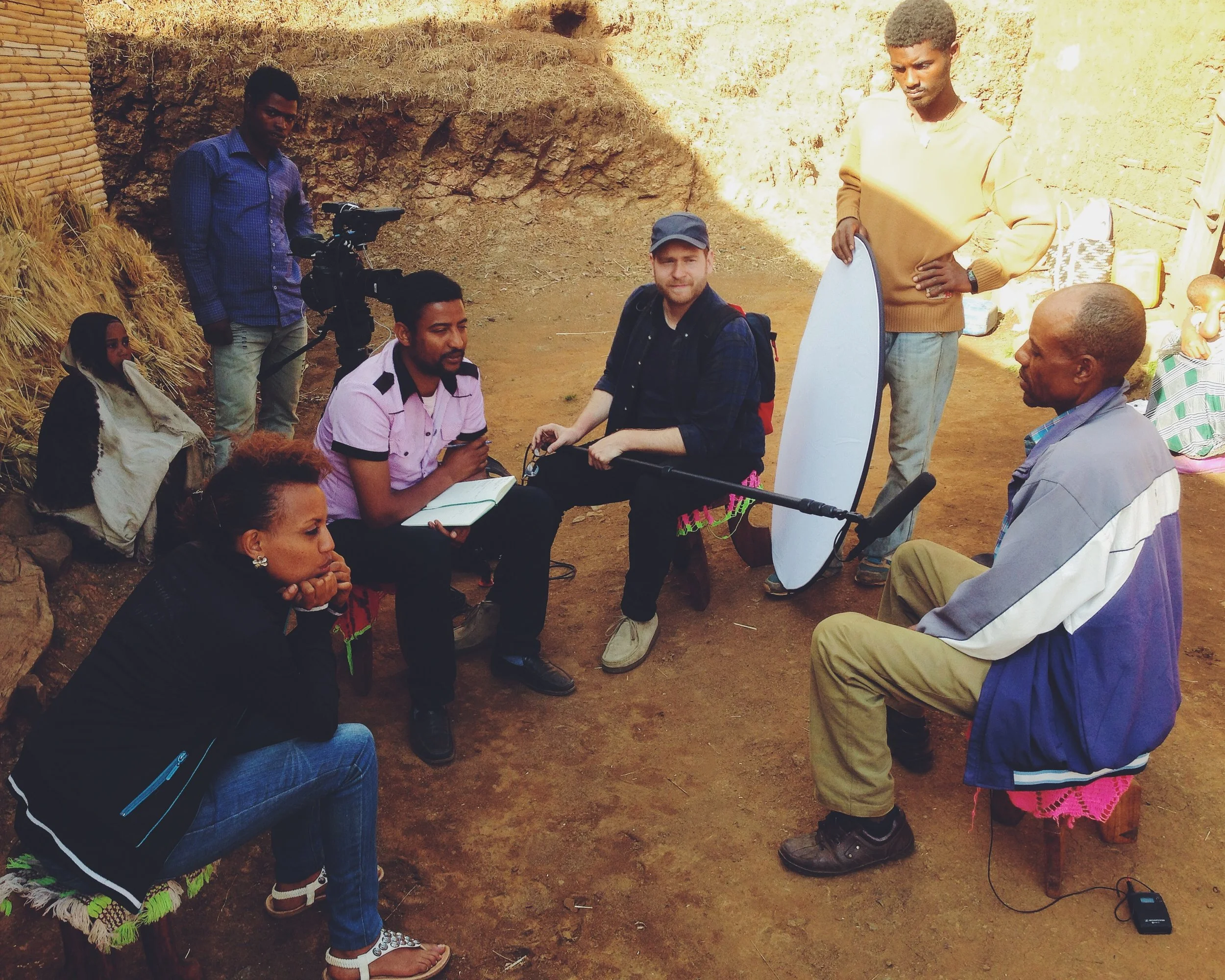
Interviewing local health leaders in Ethiopia
The Project
For the past 15 years, I've been making documentaries in the nonprofit and social impact space. Health advocacy. Civic engagement. Education. Arts. Each project added to my archive: raw interview transcripts that got filed away after the final cut was delivered.
Last month, I decided to look at the patterns. What themes appeared across completely different sectors? What storytelling structures emerged organically? What interview techniques actually worked?
I pulled 20 interview transcripts spanning health, civic engagement, arts, and education. I fed them through analysis tools looking for recurring language, narrative arcs, and thematic clusters. And what emerged was fascinating.
The big finding: The same narrative structure appeared in 95% of my interviews—19 out of 20—regardless of subject matter, sector, or organizational partner.
Let me show you what I found.
The Universal Transformation Arc
Here's the pattern that appeared in nearly every successful interview:
Act 1: Before (Ordinary world, baseline normal)
Act 2: Trigger (The moment everything changed)
Act 3: Journey (Adaptation, learning, community formation)
Act 4: After (New normal, advocacy, meaning-making)
This wasn't conscious. I wasn't deliberately seeking out transformation stories. But looking back across 185,000 words, the pattern is undeniable.
Health Documentary Example
In kidney disease interviews, the arc looked like this:
Before: "I was just living my life normally..."
Trigger: "When they told me I had kidney failure..."
Journey: Treatment, dialysis, finding support groups
After: Advocacy, helping others, raising awareness
One subject described the realization moment: "I realized that I had, you know, that my kidneys weren't working, was that how it changed everything."
Another articulated the meaning-making that defines Act 4: "I became much more involved and passionate about working with AKF after I realized how they helped me, but the greater impact they have on people who need it."
Civic Engagement Example
In voting rights interviews, the same structure appeared with completely different content:
Before: Unaware of systemic barriers
Trigger: Personal experience of voter suppression
Journey: Learning, organizing, community building
After: Policy advocacy, continued fight
The trigger moments in civic stories connect individual experience to systemic reality—that's the documentary gold.
Why This Structure Works
Audiences connect to change. Static subjects, no matter how interesting, don't create narrative momentum. But a person who moves from Point A to Point B—who transforms—gives us a journey to follow.
Hope is embedded in the structure. Even in stories about ongoing struggles, the transformation arc implies agency and growth. The subject isn't just a victim; they're an actor in their own story.
Personal becomes universal. When you structure around transformation, individual experiences illuminate larger truths. One person's diagnosis becomes everyone's fear. One person's advocacy becomes a template for change.
Community as Storytelling Structure
The second major pattern: 18 out of 20 interviews (90%) contained an isolation-to-connection arc.
The pattern: "I thought I was alone" → "I found my people"
This appeared across every sector:
In health stories: Subjects moved from isolated diagnosis to finding support groups. As one person put it: "We need to continue to educate people about kidney disease"—the "we" signals community formation.
In civic stories: Individual voting barriers became collective organizing. "We need to make sure that we're following the process that has worked for us"—again, that shift from "I" to "we."
In arts stories: Solo creative practice evolved into teaching and community building.
Documentary Applications
When you recognize community as a structural element, it opens up production possibilities:
B-roll opportunities: Support group meetings, community events, collective action become visual representations of the transformation.
Multiple voices: Community members reinforce and contextualize the main subject's story.
Resolution without false endings: Even if the individual struggle continues (chronic illness, ongoing policy fights), community formation provides narrative satisfaction.
Visual metaphor: The literal gathering of people on screen mirrors the thematic gathering of strength, knowledge, and purpose.
What Makes a Quote "Work"
One question I couldn't answer from transcripts alone: Why do certain quotes end up in final cuts while others stay in the cutting room?
But I could identify characteristics of quotes I marked as "powerful" during the analysis:
1. Specificity + Universality
Great documentary quotes contain concrete details that anyone can relate to.
Generic: "It was hard when I got sick."
Specific + Universal: "When they told me I had kidney failure, but as a child being so young, I didn't know what that meant."
The second quote works because it combines medical specificity (kidney failure) with universal experience (childhood confusion).
2. Emotional Clarity
Subjects who can name what they felt create moments of recognition for audiences.
"I became depressed because it's like, I didn't understand why this had to happen to me."
This isn't complex language, but it's emotionally precise. The quote names the feeling (depression), identifies the cause (lack of understanding), and expresses the universal "why me?" question.
3. Forward Motion
The best quotes propel the story rather than simply describing events.
"I realized that, you know, I was given this for a reason and that I can't sit around and be depressed and sad all the time about it."
This quote does double duty: it acknowledges the past emotional state while pivoting toward action. It's a turning point, not just description.
4. Metaphorical Thinking
Some subjects naturally think in images and metaphors. These are documentary gold.
"I realized that my voice mattered was I, when I would do my dialysis in-center... my second time going through the dialysis process."
The physical reality (dialysis center) becomes metaphorical space (where voice matters). When subjects make these connections themselves, it's more powerful than any filmmaker's imposed metaphor.
How My Interview Technique Evolved
Looking across 15 years of transcripts revealed patterns in my own development as an interviewer.
Pre-Interview Investment Increased
In later interviews, subjects reference previous conversations more frequently: "Like we talked about before..." This suggests I'm doing more thorough pre-interviews—and it's working. When subjects mention pre-interview discussions on camera, it signals trust and comfort.
Lesson: The relationship you build before rolling is visible in the footage you get.
Question Specificity Improved
Early transcripts show broader, more generic questions. Later ones show questions tailored to specific moments in the subject's story.
Early example: "Tell me about your experience."
Later example: "What was that moment like when you realized your kidneys weren't working?"
The second question gives the subject a specific frame—a moment to reconstruct—rather than asking them to summarize an entire experience.
More Space for Silence
This was harder to see in transcripts, but visible in pauses and elaborations. When subjects have space to think, they go deeper. The best material often comes after a pause, when they're processing rather than performing.
Lesson: Silence is content. Don't rush to fill it with your next question.
Follow-Up Questions Became More Sophisticated
Later transcripts show more "Can you say more about that?" and "What do you mean by..." questions. These simple follow-ups open up unexpected territory.
The pattern: Subject says something interesting → I notice it → I ask them to unpack it → they say something even more interesting.
What I'd Tell My Younger Self
Looking at 15 years of transcripts reveals what I wish I'd known from the start:
1. Spend 2x as long in pre-interview
The interviews where subjects are most vulnerable are the ones where I invested significant time before rolling. This isn't optional prep—it's the foundation of the work.
2. Prepare transformation prompts
"When did everything change?" is my most reliable question. It works across every sector, every subject type, every story structure. Have variations of this question ready.
3. Silence is content
Your job isn't to fill every moment with talking. Your job is to create space for subjects to think, feel, and articulate. The pauses are where the real work happens.
4. Listen for metaphors
When subjects start thinking metaphorically—connecting their specific experience to larger truths—that's your documentary thesis emerging. Follow it.
5. Trust the transformation structure
Even when you think your story is different, the transformation arc probably applies. Before/Trigger/Journey/After works for health stories, civic stories, arts stories, education stories. It's not formulaic—it's fundamental to how we make meaning from experience.
Sector-Specific Patterns
While the transformation structure appeared universally, each sector had distinctive characteristics:
Health Documentary (10 interviews, ~90,000 words)
Consistent elements:
Diagnosis as universal story structure
Tension between medical jargon and emotional truth
Community support as essential to the "treatment" narrative
The pattern: Individual health crisis → community support → systemic advocacy
Subjects who could translate medical complexity into emotional experience made the strongest interview subjects. The best health stories don't require audiences to understand the medicine—they require audiences to understand the meaning.
Civic Engagement (4 interviews, ~35,000 words)
Consistent elements:
Personal voting experience illuminates systemic barriers
Individual rights become collective action
Documentary as policy tool
The pattern: Personal barrier → systemic realization → collective organizing
One pattern that appeared repeatedly: subjects articulating how "my story" became "our fight." That linguistic shift from individual to collective marks a key transformation moment.
The Unexpected Finding
The same storytelling principles work across completely different sectors. I didn't need different interview approaches for health vs. civic vs. arts stories. The transformation structure, the isolation-to-connection arc, the emphasis on specific details—all of it translated.
This suggests: Good documentary storytelling isn't sector-specific. It's human-specific.
Actionable Takeaways for Your Next Documentary
Based on 185,262 words of interview analysis, here's what I'm taking forward:
1. Pre-interview for transformation potential
Before you commit to a subject, have a conversation that tests the transformation arc. Can they articulate a clear before/after? Can they identify the moment everything changed? If not, they might not be your main subject.
2. Ask "When did everything change?"
This question and its variations unlock transformation narratives across every sector. Have it ready. Use it early.
3. Look for community connection moments
The isolation-to-connection arc appears in 90% of powerful stories. If your subject hasn't found their community yet, that might be part of your documentary's journey.
4. Create space for subjects to become metaphorical
Don't impose your metaphors. Listen for moments when subjects start making connections between their specific experience and larger truths. That's where your documentary thesis lives.
5. Structure around before/after even if it's not a health story
The transformation arc works for any subject who has moved from Point A to Point B. Don't limit it to medical stories. Apply it to creative journeys, civic awakening, educational transformation, any human change.
The Archive Opportunity
Here's what I didn't expect from this project: Your old interviews contain your blog content.
Every filmmaker has an archive. Raw transcripts. Cutting room floor material. Interviews that didn't make the final cut. That archive isn't just storage—it's intellectual property.
Patterns reveal your unique expertise. My analysis showed me I'm really good at health documentary structure, nonprofit partnerships, and transformation narratives. That's not just nice to know—it's marketable expertise.
Analysis helps you articulate your craft. I've been doing this work for 15 years, but I couldn't have explained my approach this clearly before the analysis. Now I can teach it, blog about it, and use it to attract clients who need exactly this kind of storytelling.
Old work has new value. Those 185,262 words represent 15 years of learning, pattern recognition, and craft development. They're not finished products gathering dust—they're research data for understanding how documentary storytelling actually works.
What Patterns Have You Noticed?
I'd love to hear from other documentary filmmakers: What patterns have you noticed in your own work? Do you see the transformation arc in your interviews? The isolation-to-connection journey?
Have you analyzed your own archive, or is this something you've been meaning to do?
Drop a comment or reach out—I'm curious what other filmmakers discover when they look at their work this way.